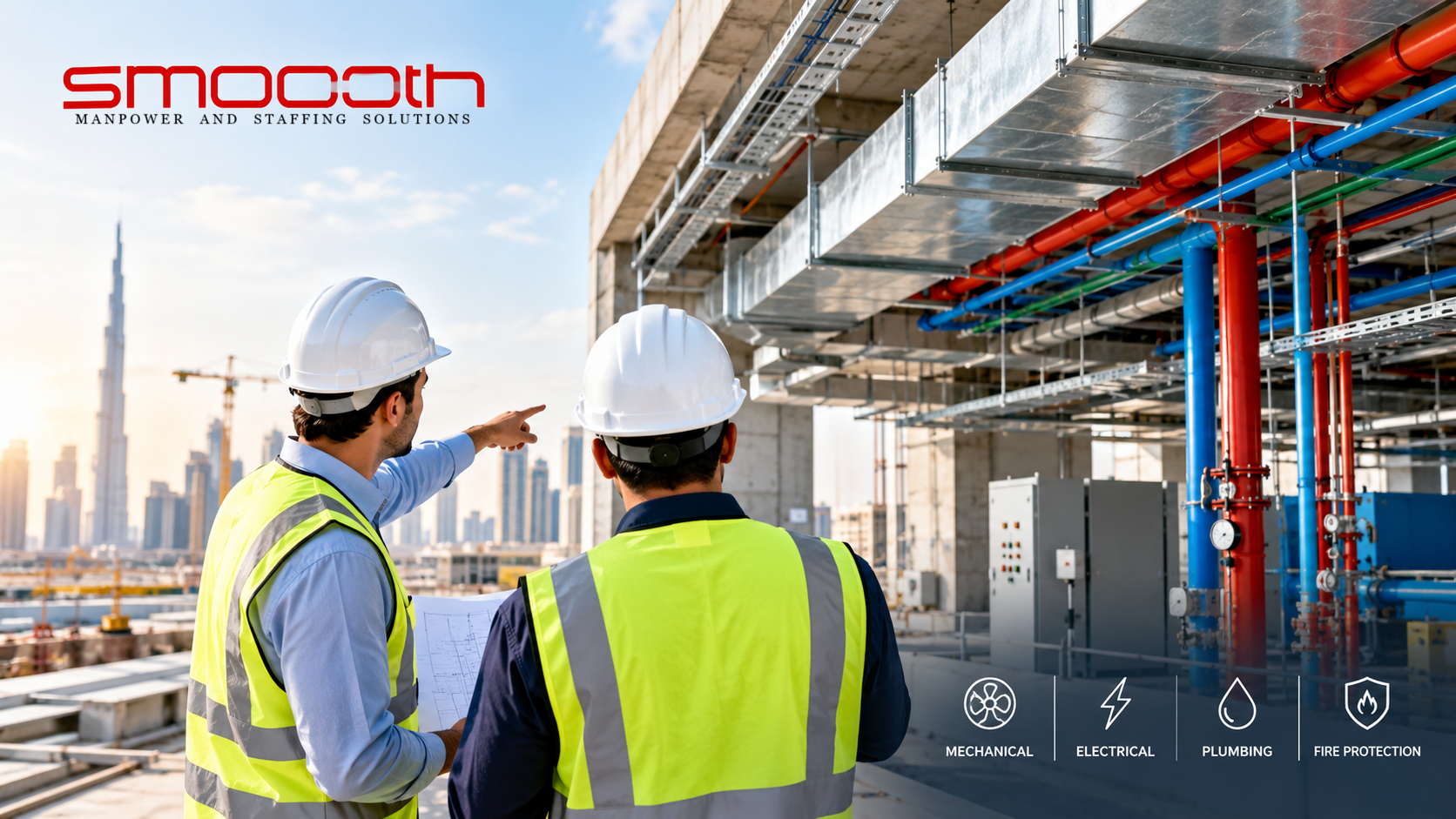
Modern buildings depend on much more than strong architectural design. Mechanical, electrical and plumbing systems determine how comfortably, safely and efficiently a building operates every day. From HVAC performance and electrical distribution to water systems and fire protection, every component needs to work together as part of one coordinated system. A professional MEP construction company in UAE can help achieve this by combining technical expertise, careful planning, quality installation and effective project management. For businesses and property owners, the result can be better building performance, fewer operational disruptions and improved long-term value. This is where experienced MEP professionals such as Smooth Manpower can make a meaningful difference through integrated contracting capabilities and skilled project teams.
What Makes MEP Important for Building Efficiency?
MEP systems are responsible for many of the functions that keep commercial, residential and industrial buildings operational.
An efficiently designed and installed MEP system can help:
- Reduce unnecessary energy consumption
- Improve indoor comfort and air quality
- Maintain reliable electrical distribution
- Minimize water wastage
- Improve fire and life-safety performance
- Reduce equipment breakdowns
- Support easier maintenance
- Extend the operational life of building systems
Poorly coordinated MEP work can have the opposite effect. Inefficient HVAC systems, overloaded electrical networks, incorrect plumbing layouts or inadequate maintenance access can increase operating costs and create avoidable problems.
1. Better HVAC Performance
Heating, ventilation and air-conditioning systems can have a major influence on a building's energy consumption. Professional MEP contractors understand how equipment selection, ductwork, ventilation, controls and installation quality affect overall HVAC performance.
A properly planned HVAC system can provide consistent temperatures while avoiding excessive energy use. Professional installation also helps reduce problems such as air leakage, poor airflow and uneven cooling.
For UAE buildings, where cooling demand can be significant for much of the year, efficient HVAC design and installation are particularly important.
2. Efficient Electrical Systems
Electrical systems are another fundamental part of building performance. Professional contractors plan electrical distribution according to the building's actual requirements while considering safety, reliability and future demand.
A well-executed electrical system can provide:
- Balanced power distribution
- Reduced electrical losses
- Better equipment protection
- Reliable lighting performance
- Safer operation
- Greater capacity for future expansion
Accurate planning at the construction stage can also reduce the need for expensive modifications later.
3. Integrated Mechanical, Electrical and Plumbing Coordination
One of the biggest advantages of professional MEP execution is coordination between different building systems.
Mechanical, electrical and plumbing installations often occupy the same ceiling spaces, service shafts and plant rooms. If these systems are designed or installed independently, clashes can occur during construction.
Professional coordination helps teams identify potential conflicts before installation. This improves project flow and can reduce:
- Rework
- Material wastage
- Construction delays
- Installation conflicts
- Maintenance difficulties
An experienced MEP contracting company in UAE can therefore contribute to efficiency not only through installation quality but also through better coordination between project disciplines.
4. Skilled Teams Improve Installation Quality
Even the best engineering design can underperform if installation is not carried out correctly. Skilled technicians, supervisors, engineers and other project personnel play an important role in translating technical plans into reliable building systems.
This is where manpower and staffing solutions can support construction and contracting operations. Having appropriately skilled personnel available at the right stage of a project can help contractors maintain productivity and respond to changing workforce requirements.
For complex projects, access to experienced manpower can also help maintain installation standards while keeping project schedules on track.
5. Preventive Maintenance Supports Long-Term Efficiency
Building efficiency does not end when construction is completed. Mechanical, electrical and plumbing systems require regular inspection, servicing and maintenance to continue performing effectively.
Preventive maintenance can identify developing issues before they become major failures. Examples include:
- HVAC filter and equipment inspections
- Electrical system testing
- Pump and motor checks
- Plumbing inspections
- Fire-system testing
- Control-system monitoring
Regular maintenance can reduce unexpected downtime and help building owners protect their investment over the long term.
6. Better Project Planning Reduces Waste
Professional MEP contractors understand that efficiency starts before installation begins. Detailed scheduling, procurement planning, technical coordination and workforce management can significantly influence project performance.
A structured approach helps ensure that materials, equipment and skilled personnel arrive when they are needed. This can reduce idle time and avoid unnecessary storage or material movement.
Effective manpower and staffing solutions can further strengthen this process by helping contractors maintain suitable workforce levels throughout different project phases.
7. Commissioning Ensures Systems Work as Intended
Commissioning is an important stage in achieving building efficiency. After installation, MEP systems need to be tested and adjusted to confirm that they perform according to the required specifications.
Professional commissioning can help identify:
- Incorrect equipment settings
- Airflow or pressure problems
- Electrical irregularities
- Control-system issues
- Plumbing performance problems
- Integration failures between systems
Resolving these issues before handover gives building owners greater confidence in the performance of their systems.
8. Technology and Smart Building Integration
Modern MEP projects increasingly incorporate automation, monitoring and building-management technologies. These systems can provide greater visibility into energy consumption, equipment performance and operating conditions.
For example, building-management systems can help monitor HVAC equipment and adjust operating conditions according to occupancy and demand. Similarly, smart controls can improve lighting and energy management.
Professional MEP teams can help ensure these technologies are properly integrated with the building's wider infrastructure.
9. Safety and Compliance Improve Operational Reliability
Building efficiency should never be considered separately from safety. Electrical installations, fire-protection systems, HVAC equipment and plumbing infrastructure must be installed and maintained according to applicable requirements.
Professional MEP teams use structured processes to support safe installation and reliable operation. Fire detection and prevention systems, for example, require careful installation, testing and commissioning to perform when they are needed.
A properly coordinated MEP contracting service in UAE can therefore contribute to both operational efficiency and safer building environments.
10. How Smooth Manpower Supports MEP Projects
Smooth Manpower connects its contracting capabilities with workforce expertise to support projects across the UAE. Its published MEP contracting information covers areas including design and procurement, electrical and mechanical work, HVAC installation, project management, commissioning, instrumentation, public health and fire detection and prevention systems.
The company has been established since 2005 and operates across contracting and manpower services. Its broader workforce capabilities include skilled professionals and staffing support across multiple industries.
For contractors and businesses, combining technical MEP capabilities with dependable manpower and staffing solutions can make workforce planning more responsive throughout the project lifecycle.
Choosing the Right MEP Partner
Selecting an MEP contractor should involve more than comparing project prices. Businesses should consider technical capabilities, workforce availability, project-management expertise, installation quality and post-installation support.
Before selecting a contractor, consider:
- Experience with similar building types
- Range of MEP disciplines covered
- Availability of qualified technical teams
- Project planning and coordination capabilities
- Testing and commissioning processes
- Maintenance and support capabilities
- Ability to scale resources when project requirements change
A capable contractor can become a long-term partner in maintaining building performance rather than simply an installation provider.
Conclusion
Professional MEP contractors play a critical role in making buildings more efficient, reliable and comfortable. From HVAC and electrical systems to plumbing, commissioning and preventive maintenance, every component contributes to overall building performance. Strong planning, skilled installation and effective workforce management can reduce waste, minimize disruptions and improve the long-term operation of building infrastructure. Smooth Manpower combines MEP contracting capabilities with workforce expertise to support businesses and projects across the UAE. For energy-intensive sectors and industrial projects that require specialized personnel, partnering with an experienced oil and gas manpower supply company can also provide access to workforce capabilities suited to demanding operating environments.